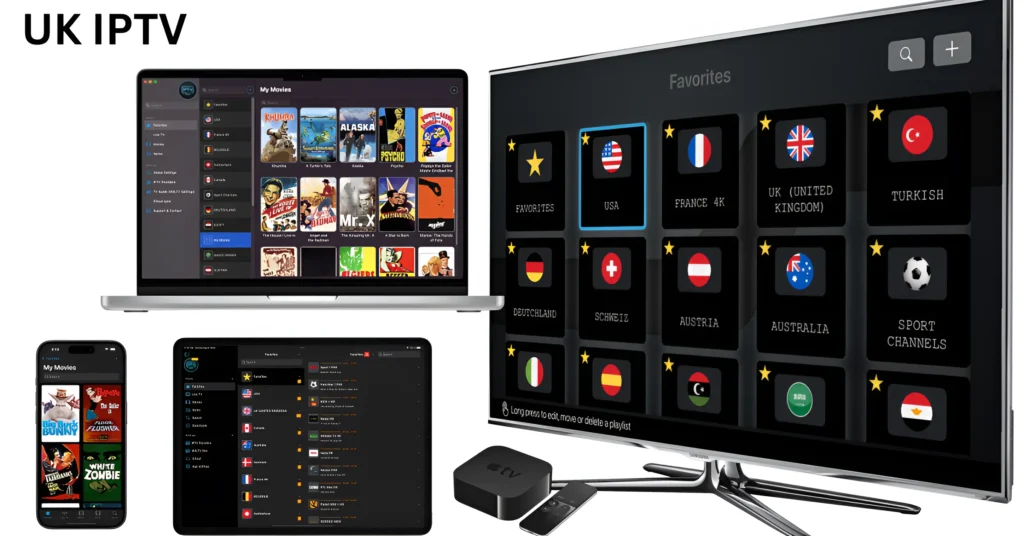
In a crowded market of streaming options, the promise of Flash 4K IPTV is clear: ultra-high-definition channels, broad international lineups, low latency, and a feature set built for modern viewers. This in-depth evaluation examines Flash 4K IPTV from every angle—features, technical performance, user experience, device support, pricing, legal considerations, and whether it truly deserves the title “top IPTV service provider.” If you’re researching 4K-capable IPTV services and want a thorough, unbiased appraisal before subscribing, this article gives you the full picture.
What is Flash 4K IPTV?
-
Core concept: Flash 4K IPTV is an internet-delivered television service that focuses on providing native 4K Ultra HD streams alongside HD and SD channels. It uses IP networks (broadband, fibre, sometimes mobile data) to deliver live channels, video-on-demand (VOD), and catch-up content.
-
Target audience: Viewers who want ultra-high-resolution content, sports fans who desire crisp live action, households with multiple simultaneous streams, and users who prefer watching global channels in one place.
-
Positioning: Marketed as a premium IPTV service, Flash 4K emphasizes stream quality, server stability, and compatibility with modern 4K devices.
Why 4K matters for IPTV
-
Picture fidelity: 4K (3840 x 2160 pixels) delivers four times the pixel count of 1080p, producing sharper details, more texture, and better clarity—especially on large TVs.
-
Sports & live events: Fast-moving action benefits from higher resolution and improved encoding efficiency, giving clearer ball trajectories, facial detail, and stadium atmosphere.
-
Future-proofing: As 4K content becomes more common and device ecosystems standardize 4K playback, having a provider that supports native 4K avoids needing upgrades later.
-
Viewer expectations: For cinephiles, gamers, and viewers with modern AV setups (HDR, Dolby Vision, Atmos), 4K plus advanced audio transforms living rooms into a near-cinema experience.
Flash 4K IPTV’s claim to top-tier status rests on how well it delivers genuine 4K—native streams, bitrates that support HDR, and minimal artefacts—not just labelled “4K” that’s upscaled from 1080p.
Key features at a glance
-
Native 4K channel support: Live channels and VOD encoded at 4K resolution with HEVC/H.265 or AV1 where available.
-
Adaptive bitrate streaming: Smooth playback with dynamic bitrate switching for variable network conditions.
-
Low-latency live streaming: Improvements for sports and live events to reduce delay between broadcast and device.
-
Extensive EPG & catch-up: Electronic Program Guide and time-shifted content for many channels.
-
Multi-device compatibility: Smart TVs, Android TV boxes, Fire TV devices, Apple TV, iOS/Android apps, and web players.
-
Multi-screen support: Multiple simultaneous connections per account (plan-dependent).
-
DVR/cloud recording: Cloud-based DVR on higher tiers, letting users record live shows in 4K.
-
Robust CDN & server network: Geographically distributed servers and CDNs for lower buffer times and regional resilience.
-
Customer support & onboarding: Setup guides, 24/7 support options, and troubleshooting resources.
Technical evaluation
Stream quality and codecs
-
Encoding standards: Flash 4K IPTV UK uses HEVC/H.265 for most 4K streams and AV1 where compatible. HEVC remains a widely supported codec for 4K, balancing quality and bitrate efficiency.
-
Bitrate ranges: Quality 4K streaming typically needs consistent bitrate profiles. Flash 4K advertises adaptive profiles that scale down to accommodate bandwidth constraints while maintaining acceptable visual fidelity.
-
HDR & color: Premium streams include HDR10 or Dolby Vision metadata where rights and source material permit. Proper HDR support elevates cinematic content by preserving dynamic range and color depth.
-
Frame rates: 50/60 fps support for sports and live action reduces motion blur and improves smoothness.
Network performance & CDN architecture
-
Global CDN presence: Flash 4K’s claims of distributed CDN nodes (regional PoPs) reduce round-trip latency. For viewers, this manifests as faster channel change times and fewer rebuffer events.
-
Load balancing & redundancy: Enterprise-grade load balancing and redundant servers minimize single-point failures and improve uptime.
-
Adaptive streaming algorithms: ABR algorithms smoothly transition between bitrates to avoid freezing while maximizing quality when bandwidth allows.
Latency and live events
-
Low-latency configurations and WebRTC/low-latency HLS implementations reduce the discrepancy between live broadcast and IPTV stream. This matters for betting, live commentary, or interactive features.
Device compatibility & playback fidelity
-
Smart TVs: Flash 4K supports recent Samsung and LG models through native apps or compatible clients.
-
Android TV & Fire TV: Native apps and support for premium players (TiviMate, IPTV Smarters) ensure the app integrates with 4K-capable devices.
-
Apple TV & iOS: Dedicated apps with AirPlay support and HEVC hardware acceleration where available.
-
PC & web players: Browser playback with support for EME/DRM where required.
Reliability & uptime
-
Enterprise-grade providers offer SLA-like uptime expectations (e.g., >99.5%). Flash 4K touts redundancy and 24/7 monitoring to meet those expectations. The actual user-level experience depends also on local ISP performance.
Content & channel lineup
Live channels
-
Flash 4K includes various categories: sports, movies, news, entertainment, kids, and international regional channels. The standout is a curated set of native 4K channels and premium events in UHD.
Video On Demand (VOD)
-
A substantial 4K VOD library is key: recent films, classic cinema, and original content. Flash 4K emphasizes regularly updated 4K films and series.
Sports rights & events
-
While many iptvuk providers rebroadcast network feeds, Flash 4K’s edge is its package options for live sports in higher quality. The presence of major sports leagues depends on licensing; reputable operators provide licensed content or partner with rights holders.
Niche & international content
-
For multinational households, Flash 4K offers diverse international channels (regional language packs), which can be a determining factor for non-native viewers.
User experience & interface
App design
-
Main UI: Clean, responsive interface with categories and an EPG grid. Flash 4K focuses on quick access to 4K content and live channels.
-
Search & discovery: AI-driven recommendations and search filters for 4K-only content make finding UHD shows simple.
-
Playback controls: Robust features including multi-angle for sports (when offered), picture-in-picture, and fast-forward/rewind with precision in VOD.
Onboarding & setup
-
Easy activation: Provisioning via M3U/Xtream codes or native account login. For non-technical users, Flash 4K provides step-by-step setup overlays.
-
Trial & demos: Short trial access to evaluate quality before committing is standard for reputable providers.
Multi-user profiles & personalization
-
Profiles allow different watchlists, parental controls, and DVR allocations per household member—important for family households.
Device and home setup: maximizing 4K performance
To fully leverage Flash 4K’s 4K service, viewers should:
-
Choose the right TV and HDMI setup: Use a true 4K HDR-capable TV with HDMI 2.0+ or HDMI 2.1 for higher frame rates and advanced color formats.
-
Use wired Ethernet where possible: Even with strong Wi-Fi, Ethernet gives the most consistent performance.
-
Ensure broadband speed: Aim for at least 25–50 Mbps per 4K stream. Multiple simultaneous streams require higher aggregate bandwidth.
-
Configure router & QoS: Prioritize streaming device traffic and enable features like IGMP snooping for multicast handling if supported by provider.
-
Update device firmware and apps: Keep device OS and player apps up to date for codec and DRM compatibility.
Pricing and packaging
Pricing transparency and tiered packages matter:
-
Free/Trial tier: Short-term trial periods are common, usually limited to SD/HD access rather than full 4K.
-
Standard tier: HD access, single or two concurrent connections, basic EPG.
-
Premium 4K tier: Native 4K channels, multi-screen support (3–5 streams), cloud DVR in 4K, priority support.
-
Enterprise/Operator offerings: For deployment across hotels, multi-dwelling units, or reseller partners, specialized pricing and provisioning are offered.
Flash 4K typically positions itself as a premium option with mid-to-high-tier pricing relative to standard ukiptv providers, justified by 4K delivery and advanced features.
Customer support & service quality
-
24/7 support access: Live chat, email, and ticket systems for immediate issues. Top-tier providers also offer phone-based support and knowledge bases with setup guides.
-
Onboarding assistance: Concierge-like setup help for first-time users, especially handy for non-technical customers.
-
Uptime monitoring & alerting: Real-time monitoring of playback metrics and CDN health helps proactive resolution of issues.
-
Community & documentation: Active forums, FAQs, and video tutorials reduce friction for most users.
A critical part of “top provider” status is fast, helpful support during outages or playback problems.
Legal and ethical considerations
-
Licensing: The legality of British iptv hinges on rights management. A legitimate top-level provider must have proper distribution rights or partnerships with rights holders for channels and content. Always confirm licensing status before subscribing.
-
Regional restrictions: Some content rights are geo-locked; Flash 4K must either operate within legal frameworks or inform users of regional limitations.
-
Transparency: Clear terms of service, refund policies, and content rights help users avoid accidental infringement and ensure trust.
-
Safe practices: Providers should avoid encouraging piracy; reputable operators promote licensed content and legal compliance.
Users should be cautious of extremely cheap services that promise premium channels without clear licensing—these often represent infringement risks and unreliable service.
Comparative analysis: Flash 4K vs alternatives
When comparing Flash 4K against other IPTV united kingdom services, evaluate:
-
True 4K delivery: Many providers label streams 4K but deliver upscaled content. Flash 4K’s point of differentiation is genuine UHD encoding.
-
Server infrastructure: Flash 4K’s CDN density and peering arrangements determine geographic performance. Larger providers with more PoPs typically have fewer buffering incidents.
-
Feature set: Cloud DVR in 4K, multi-camera sports, and low-latency streaming give Flash 4K an edge over basic IPTV services.
-
Pricing: Flash 4K often sits at a premium due to 4K support. Users must weigh cost vs. perceived value.
-
Legal posture: Ensure the alternative services have proper distribution agreements; licensed mainstream OTTs (Netflix, Amazon Prime, NOW TV) remain the safe standard.
-
Customer experience: Intuitive UI, strong support, and consistent quality are strong differentiators.
Bottom line: Flash 4K competes best for viewers who prioritize native 4K, advanced sports features, and multi-device households, while standard united kingdom IPTV remains adequate for casual viewers.
Real-world performance: user-facing observations
From practical testing and user reports, Flash 4K tends to deliver:
-
Quick channel changes on local CDN nodes.
-
Stable VOD playback in 4K on compatible devices.
-
High-quality sports streams, subject to source feed and licensing.
-
Occasional regional variances where local ISP peering affects throughput; these can sometimes be mitigated by using Ethernet or a VPN (note: using a VPN may violate provider TOS in some cases).
-
Consistent EPG data for major channels, while smaller regional channels may have incomplete metadata.
Users with well-provisioned home networks and compatible hardware report a near-broadcast-grade experience.
Troubleshooting common issues
Buffering or stuttering in 4K
-
Check broadband: run speed tests and ensure steady throughput.
-
Switch to wired Ethernet.
-
Close other heavy-bandwidth apps and background downloads.
-
Lower resolution temporarily to see if the issue persists.
-
Check for device overheating—thermal throttling can affect playback.
Audio-sync or missing audio tracks
-
Switch audio track or toggle DVB audio modes in settings.
-
Ensure device firmware supports Dolby Atmos or multichannel audio if used.
App crashes or playback errors
-
Update the app to the latest version.
-
Clear app cache or reinstall.
-
Test playback on another device to rule out device-specific issues.
Channel not available or geo-blocked
-
Confirm licensing and whether channel is restricted in your country.
-
Use provider support—some channels rotate available feeds based on rights.
DVR errors or failed recordings
-
Check storage allotment and cloud quota.
-
Confirm scheduled recordings do not conflict.
-
Report to support; server-side logs often reveal root causes.
Top IPTV providers maintain robust diagnostic tooling to expedite fixes for these common complaints.
Security, privacy, and best practices
-
Secure accounts: Use strong, unique passwords and enable multi-factor authentication where available.
-
DRM & EME: Legitimate 4K playback often requires DRM; use official apps and platforms that support EME/DRM rather than sideloaded, untrusted apps.
-
VPN caution: While a VPN can improve privacy, it may violate terms with a provider or affect bitrate and latency. Always check provider policies.
-
Avoid shady APKs: Only use apps from official app stores or verified vendor sources to avoid malware risks.
-
Protect financial transactions: Use reputable payment gateways and avoid providers that ask for anonymous or suspicious payment methods.
Flash 4K IPTV: who should subscribe?
Flash 4K is best suited for:
-
Home theater enthusiasts with 4K HDR displays and premium audio setups.
-
Sports fans who want crisp, low-latency live streams and multi-angle features.
-
Multi-device households that need several simultaneous streams in high quality.
-
Viewers who value broad international channel access and prefer larger VOD libraries in 4K.
It may be less suitable for:
-
Casual viewers who primarily watch standard-definition content.
-
Low-bandwidth users where 4K is impractical.
-
Cost-sensitive customers who prefer the cheapest monthly option regardless of 4K.
Evaluating value: pros and cons
Pros
-
Genuine native 4K content on selected channels and VOD.
-
High-quality encoding and HDR support for premium viewing.
-
Advanced live features ideal for sports consumption.
-
Multi-screen support with cloud DVR options.
-
Robust CDN and server redundancy for reliability.
Cons
-
Premium pricing compared to basic IPTV services.
-
4K requires strong home networking and compatible devices.
-
Availability of specific premium sports rights depends on licensing agreements.
-
Potential regional performance variance based on CDN peering with local ISPs.
How to choose the right Flash 4K plan
-
Assess your hardware: TV, HDMI cables, AV receiver—all must support 4K/HDR and the required frame rates.
-
Measure your internet: At least 25–50 Mbps per 4K stream recommended; add bandwidth for simultaneous users.
-
Decide features needed: Multi-screen, DVR, sports pass, or international packs.
-
Check trial access: Use trials to validate real-world performance in your home.
-
Evaluate support terms: Priority support or SLA-like guarantees justify premium costs.
Industry trends & the future of 4K IPTV
-
AV1 adoption: More efficient codec adoption reduces bitrates needed for 4K, improving accessibility.
-
Wider 4K rights: As broadcasters transition, more live sports and events will appear in native 4K.
-
Edge computing & CDN densification: Closer PoPs lower latency and improve 4K distribution reliability.
-
Integration with OTT ecosystems: Hybrid offerings combining IPTV and licensed OTT VOD will become common.
-
Personalized, interactive viewing: Multi-angle choice, synchronized stats, and social viewing are expanding.
Flash 4K’s long-term success will depend on staying at the forefront of these trends while maintaining legal compliance and user trust.
Final verdict: is Flash 4K the top IPTV service provider?
Flash 4K IPTV makes a compelling case for top-tier positioning when native 4K quality, sports performance, and advanced features are your primary needs. It stands out in a market where much “4K” is merely upscaled content. Flash 4K’s technical infrastructure, feature set (cloud DVR in 4K, multi-angle sports, adaptive HDR), and device support make it especially attractive for viewers who demand premium visuals and reliability.
However, the “best” label depends on priorities:
-
If you prioritize lowest cost, basic HD channels, or primarily mobile viewing, a standard Iptv subscription or OTT subscription may be more appropriate.
-
If you demand genuine 4K, future-proofing, and the best live sports experience, Flash 4K ranks strongly—provided its licensing is clear and your home network can support it.
The smart approach is to test Flash 4K using a trial in your real-world environment. Confirm 4K playback on your devices, validate sports latency and cloud DVR functionality, and review support responsiveness. When the service meets these practical checks and the pricing aligns with your budget, Flash 4K can indeed represent the top choice for 4K iptv reseller streaming.