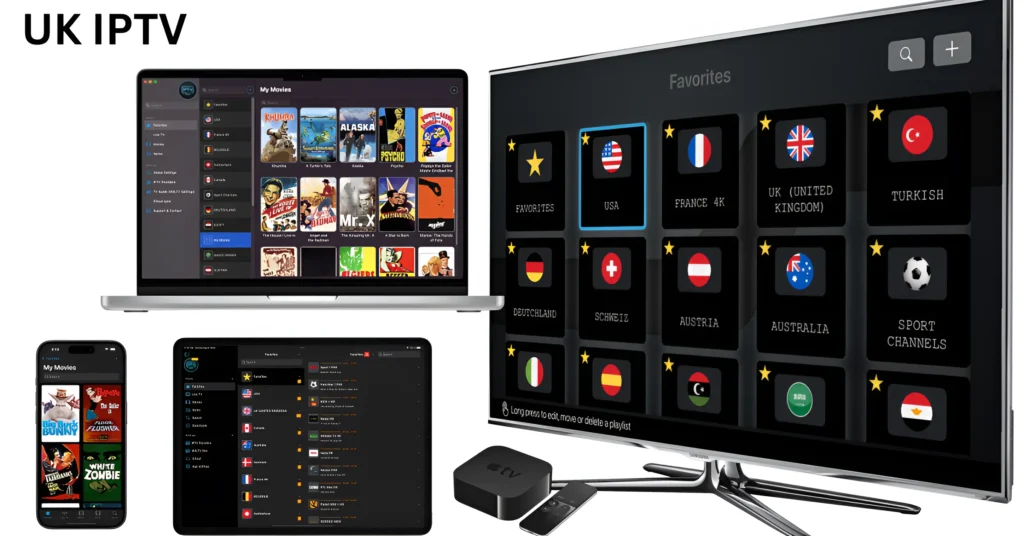
IPTV (Internet Protocol Television) has reshaped how people in the UK watch TV. From live channels and sports to huge on-demand libraries, IPTV UK sits at the center of today’s streaming-first entertainment landscape. This guide explains what IPTV is, how it fits into the UK market, which services to consider (licensed and reputable options first), how to evaluate third-party providers, technical requirements, legal risks, and practical tips to choose the Best IPTV Services in the UK experience for your home. I also include current industry context and regulatory signals that matter for UK viewers in 2025.
What is IPTV (and how is it different from streaming apps)?
Best IPTV describes TV content delivered over Internet Protocol networks rather than satellite or coaxial cable. It covers three main delivery types:
-
Live IPTV: real-time streaming of broadcast channels;
-
Time-shifted/catch-up: ability to watch recently aired programmes;
-
VOD (Video on Demand): movies and series available any time.
While many OTT apps (Netflix, Disney+, Amazon Prime) are technically IPTV when accessed via IP networks, the term is often used to describe services that mimic traditional TV channel line-ups (live channels + EPG) delivered over the internet. That means you get the linear-TV feel plus on-demand flexibility.
Why IPTV matters in the UK right now
UK viewing habits continue to shift from linear broadcast to internet-delivered content. The TV set still dominates day-to-day viewing, but audiences increasingly access broadcaster services online and through apps. Ofcom’s Media Nations reports show that while linear broadcast viewing has declined, online and app-based viewing remains large and growing making smart iptv and hybrid OTT services central to modern TV consumption.
Regulation and broadcaster strategy are also changing. The UK government and Ofcom are engaging with how iptv providers should be treated for advertising and broadcast rules, reflecting the fact many services look and behave like traditional TV despite being delivered over the internet. That regulatory evolution matters when choosing reputable, compliant services.
Licensed, reputable IPTV options in the UK (what to try first)
Start with services that are clearly licensed, widely used, and supported by major broadcasters. These give you legal protection, stable streams, reliable support, and clear pricing.
-
BBC iPlayer — The BBC’s on-demand and live streaming service remains free for licence-fee payers and features live channels, catch-up and extensive archives. It’s a cornerstone of legitimate UK streaming.
-
ITVX, All 4, and STV Player — The main commercial public service broadcaster apps for ITV, Channel 4 and STV offer live channels, catch-up and VOD with advertising or registration models.
-
NOW (Sky’s streaming passes) — NOW offers rolling monthly passes (Entertainment, Cinema, Sports) for Sky content without a satellite dish—useful for sports and premium channels on-demand.
-
Sky Stream / Sky Q apps — Sky’s ecosystem provides strong live and on-demand coverage, often with exclusive sports and premium film content (contracts and bundles apply).
-
TNT Sports (formerly BT Sport) — The channel rebrand and rights consolidation mean TNT Sports remains a major sports provider in the UK market; many licensed iptv smarters and OTT bundles include access to its live sports.
-
Amazon Prime Video, Netflix, Disney+, Apple TV+ — While primarily VOD platforms, these services are essential building blocks of any modern IPTV/streaming package and integrate with many iptv subscribe front-ends or TVs directly.
These platforms are accessible via official apps on smart TVs, streaming sticks (Fire TV, Chromecast with Google TV), consoles, and mobile devices. They are the safest starting point for UK viewers who want IPTV functionality without legal or reliability concerns.
Third-party IPTV providers: what they offer and what to watch for
Beyond major licensed apps, many third-party IPTV services (subscription lists that deliver many international channels and VOD libraries) exist. They can be attractive because of lower prices and huge channel lists, but the market is mixed:
-
Pros: often wide international channel access, low monthly fees, fast feature updates, multi-screen support.
-
Cons: many operate without proper rights to the channels they distribute, leaving customers exposed to shutdowns, poor quality, or legal risk. Enforcement actions against illegal operators continue across the UK and Ireland. FACT and industry bodies have actively pursued illicit iptv united kingdom networks in recent years.
If you consider a third-party IPTV service, check for: transparent company details, payment methods, refund policy, uptime/review evidence, and whether the service requires “patched” or jailbroken devices. If any of those are missing, treat the service with caution.
How to evaluate the Best IPTV Services in the UK for viewers
Use this checklist when assessing providers:
-
Licensing / Legitimacy: Look for proof of broadcaster deals, clear company registration, or listings in official app stores. Licensed = less risk.
-
Channel line-up: Ensure UK favourites (BBC, ITV, Channel 4, Sky, TNT Sports) and any international channels you need are included.
-
Quality & resolution: Confirm HD/4K availability and adaptive streaming.
-
Multi-screen limits: How many simultaneous devices does the plan allow? Good family plans permit at least 2–4 streams.
-
EPG & DVR: Electronic Programme Guide, catch-up and cloud DVR give the closest experience to traditional TV.
-
Device support: Official apps for Android TV, Fire TV, iOS/Android, and smart TVs are important.
-
Customer support & trial: Always prefer providers that offer trials, clear refund policies, and responsive support.
-
Price & contract: Monthly rolling subscriptions are flexible; avoid long lock-ins unless the price justifies it.
Top recommended configurations for different UK users
-
Value seeker / cord-cutter: Start with Freeview/Freeview Play on smart TV + BBC iPlayer + ITVX + All4 + Netflix/Prime as needed. Add NOW Sport passes for major events.
-
Sports fan: Combine Sky Stream or NOW + TNT Sports subscription (or licensed aggregator), plus a solid broadband plan.
-
Large family / multi-screen: Choose providers with 3–5 simultaneous streams and cloud DVR; use mesh Wi-Fi or wired Ethernet for TVs.
-
International channels: Consider licensed global united kingdom iptv packages offered by major telecoms or verified OTT aggregators rather than low-cost pirate services.
Technical requirements & tips for a flawless IPTV experience
-
Broadband speed: Aim for at least 15–25 Mbps per HD stream; 30–50+ Mbps for concurrent HD/4K streams. Ofcom data shows increasing in-home streaming demands, so provisioning good bandwidth is critical.
-
Router & Wi-Fi: Use dual-band (5GHz) or mesh Wi-Fi for whole-home coverage. For the main living room TV, prefer wired Ethernet to avoid buffering.
-
Device choice: Modern smart TVs, Amazon Fire TV, Chromecast with Google TV, Apple TV, or dedicated Android TV boxes provide the best compatibility. Avoid outdated smart TVs that no longer receive OS/app updates.
-
VPNs: Useful for privacy, but VPNs can add latency and may violate some provider T&Cs. Use them carefully and only with services that permit them.
-
DVR & storage: Choose providers with cloud-based recording to avoid local storage issues and keep recordings available across devices.
Legal and safety considerations (must reads for UK viewers)
-
Illegal IPTV remains a focus for enforcement. Industry groups and law enforcement continue to act against pirate british iptv networks users who subscribe to illicit services risk service interruption and other consequences. FACT and rights holders have run crackdowns in recent years.
-
Government & regulator activity: The UK government and Ofcom are clarifying how IPTV services should be regulated, especially around advertising rules and broadcaster responsibilities. This will change the landscape for providers and should increase protections for consumers using licensed services.
-
Payment & privacy: Pay with traceable, reputable methods (cards, PayPal) rather than anonymous crypto to ensure refunds and dispute options. Read privacy policies to understand how providers handle your data.
Costs & pricing — what to expect in 2025
-
Major licensed OTT passes (NOW, Sky Stream, individual platform subscriptions): typically £15–£30 per month depending on bundles and sports passes.
-
All-in OTT households adding Netflix/Prime/Disney+/AppleTV+/Sky passes can see combined bills in the £30–£60+ range, comparable to lower-tier cable packages but with more flexibility.
-
Third-party IPTV providers sometimes advertise far lower fees, but these often reflect licensing risks and unreliable service. Balance cost savings against legal and reliability trade-offs.
Practical how-to: switching from cable to IPTV
-
Audit what you watch: List must-have channels, on-demand titles and sports.
-
Check availability: Ensure those rights are available via licensed OTT/IPTV bundles in the UK.
-
Test trials: Use free trials for NOW, Netflix, Prime, TNT Sports or provider trials.
-
Upgrade broadband if needed: Ensure you have the speed and stability required.
-
Choose devices & set up: Install official apps on your smart TV or streaming stick.
-
Keep legacy options: If you need occasional cable-only events, many households keep a low-cost sport or news bundle for a transitional period.
Common FAQs:Best IPTV Services in the UK
Q: Is IPTV legal in the UK?
A: IPTV as a technology is legal. Legality depends on whether the provider has rights to distribute the channels and content. Choose licensed services to stay safe.
Q: Will IPTV replace cable TV?
A: Trends point to continued growth of IPTV/OTT and a gradual decline in traditional cable/satellite for many households, especially where broadband is robust. Broadcasters are also moving into the OTT space, accelerating the shift.
Q: Can I watch live sports on IPTV in the UK?
A: Yes—if you subscribe to licensed services that hold sports rights (NOW, Sky/TNT Sports, broadcaster apps). Be wary of unlicensed feeds.
Final recommendations
-
Start with licensed apps and aggregator bundles. They give the best combination of reliability, legal safety and support. (Examples: BBC iPlayer, ITVX, NOW, Sky/TNT Sports, Prime, Netflix.)
-
Avoid “too cheap to be true” third-party services unless you can confirm clear licensing—many are exposed to shutdowns and legal action. FACT and other bodies regularly target illicit operators.
-
Ensure your home network is ready. Invest in good broadband, a modern router or mesh system, and wired connections for primary TVs.
-
Use trials and compare: take advantage of trial periods to gauge stream quality, device support, and customer service.
Conclusion: Best IPTV Services in the UK
“IPTV British” today is a broad ecosystem—from trusted broadcaster apps to third-party aggregators. For most UK viewers, the best approach is a combination: licensed IPTV/OTT services for everyday viewing and sports, supplemented by specialist services where needed. That gives flexibility, legal protection, and the richest content mix while avoiding the reliability and legal risks of unlicensed platforms. With broadband improvements and regulatory clarity advancing in 2025, Best iptv service will only become more central to UK entertainment—so choose wisely, prioritise licensed providers, and optimize your home network for the best results.
Try IPTV Free Trial….